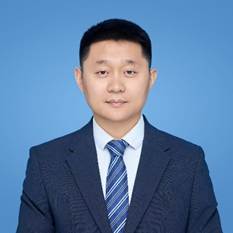
刘凯,长聘教授、博士生导师,籍贯:山东兖州
研究领域:化学生物学、合成生物学、材料生物制造、生物无机化学
每年招生博士生1-2名,常年招聘博士后研究人员,欢迎报考!
办公室:生物医学馆D207
联系邮箱:kailiu@tsinghua.edu.cn;
教育工作经历:
博士毕业于荷兰格罗宁根大学,并在美国哈佛大学从事博士后研究,回国后先后任职于中国科学院长春应用化学研究所和清华大学化学系,目前担任化学系教授。
教学课程:
本科生-大学化学A、大学化学B;研究生-高等生物无机化学
主要成果:
围绕材料合成生物制造,建立了“理性设计原子/分子序列-精准合成控制介观组装-优化构建宏观结构和材料性能”研究理念。尤其提出多模块融合的高性能生物材料设计概念,突破单一模块分子在人工合成系统合成适配性和组装可控性差的局限,实现了蛋白、核酸、多糖及及无机复合材料体系的高效生物合成制造,展示出优异的轻质、高强高韧、超强界面粘附、超硬、超润滑、高能量回馈等性能,并完成了应用验证。截止到2026年初,发表高水平论文200余篇,以通讯作者在Nature/Science/Cell系列子刊及PNAS/JACS/Angew.Chem/Adv.Mater等影响因子10以上发表论文100余篇,引用1.5万余次,授权发明专利60余项,研究成果被Nature、ScienceDaily、人民日报、光明日报、科技日报等媒体进行亮点评述和专题报道200余次,多项成果完成落地转化和工程应用。
主要荣誉:
北鲲青年科学家奖(2025)、国家杰出青年科学基金(2021),国家重点研发计划首席科学家(2024),中国化学会菁青化学卓越奖(2025)、北京市科技奖-杰出青年中关村奖(2024)、中国化工学会科学技术一等奖(2023)、Young Innovator Award of Nano Research(2023)、教育部中央高校优秀青年团队负责人(2023)、北京大兴新国门领军人才(2022)、中国化学会生命化学青年创新奖(2021)、吉林省青年科技奖(2018)、国家海外青年人才计划(2016)、荷兰NWO Rubicon Award(2016)、荷兰优秀博士论文(Cum Laude,2015)、国家优秀自费留学生奖(2015)。
学术兼职:
美国化学会期刊ACS Biomaterials Science & Engineering副主编、中国工程院院刊Engineering、教育部《高等学校化学学报》、中国生物工程学会《合成生物学》期刊、ACS Applied Bio Materials期刊编委、Early Career Researcher (ECR) Editorial Board of the Wiley Polymer Journals、北京化学会理事、中国生物信息学学会计算合成生物学专委会委员、中国化学会生物物理化学专委会委员等。
近期代表性论文(通讯作者)
1. Charge-Driven Bioshield Remodels Diabetic Oral Microenvironment for Accelerated Wound Healing, Adv. Mater., 2026, e16778.
2. Biomanufacturing of Advanced Materials Driven by Synthetic Biology, CCS Chem., 2026, 8, 164.
3. Genetically Encoded Design and Biomanufacturing of Mechanical Protein Materials, Acc. Mater. Res., 2026, 7, 58–71.
4. Liquid crystal–guided DNA information storage: Nondestructive recovery and long-term preservation, Sci. Adv., 2025, 11, eadu3957.
5. Temporal Immunomodulatory Hydrogel Regulating the Immune-Osteogenic Cascade for Infected Bone Defects Regeneration, Adv. Mater., 2025, e14419.
6. Nanoshield Architecture Harnessing Neoantigen-Targeting Peptides Enables Durable Post-surgical Glioma Immunotherapy, Nano Lett., 2025, 25, 13629–13638.
7. In Situ Ultrasound-Triggered Bioluminescence for Combined Sono/Photodynamic Immunotherapy, ACS Nano, 2025, 19, 26791–26804.
8. Modulation of Near-Infrared Afterglow Luminescence in Inorganic Nanomaterials for Biological Applications, Adv. Mater., 2025, 2419349.
9. Phytochlorin-Based Sonosensitizers Combined with Free-Field Ultrasound for Immune-Sonodynamic Cancer Therapy, Adv. Mater., 2025, 2410559.
10. Dynamic Peptide Nanoframework-Guided Protein Coassembly: Advancing Adhesion Performance with Hierarchical Structures, J. Am. Chem. Soc., 2025, 147, 2335−2349.
11. Flexible Sono–Piezo Patch for Functional Sweat Gland Repair through Endogenous Microenvironmental Remodeling. ACS Nano, 2024, 18, 20283–20295.
12. Multi-Functional Lanthanide Metallopolymer: Self-Healing and Photo-Stimuli-Responsive Dual-Emitting Luminescence for Diverse Applications. Adv. Mater., 2024, 36, 2405164.
13. A Hydroxylamine-Mediated Amidination of Lysine Residues That Retains the Protein’s Positive Charge. Angew. Chem. Int. Ed., 2024, 63, e202402880.
14. Customized Proteinaceous Nanoformulation for In Vivo Chemical Reprogramming. Adv. Mater., 2024, 2311845.
15. Modular Protein Fibers with Outstanding High-strength and Acid-resistance Performance Mediated by Copper Ion Binding and Imine Networking. Adv. Mater., 2024,2400544.
16. Spidroin-mimetic Engineered Protein Fibers with High Toughness and Minimized Batch-to-batch Variations through β-sheets Co-assembly. Angew. Chem. Int. Ed., 2024, 63, e202400595.
17. Superstrong and tough DNA bulk fibers via metal ion-induced multiscale engineering. Matter, 2024, 7, 963-976.
18. Biomimetic Structural Proteins: Modular Assembly and High Mechanical Performance, Acc. Chem. Res., 2023, 56, 19, 2664–2675.
19. Protein fibers with self-recoverable mechanical properties via dynamic imine chemistry. Nat. Commun., 2023, 14, 5348.
20. Contribution of Hydrogen Bond Nanoarchitectonics to Switchable Photo-Thermal-Mechanical Properties of Bio-inorganic Fibers, CCS Chem., 2023, 5, 1242.
21. Molecularly engineered protein glues with superior adhesion performance, Adv. Mater., 2022, 34, 2204590.
22. Molecular Engineered Crown-Ether–Protein with Strong Adhesion over a Wide Temperature Range from -196 to 200°C, Angew. Chem. Int. Ed., 2022, e202207425.
23. In vivo processing of digital information molecularly with targeted specificity and robust reliability, Sci. Adv., 2022, 8, eabo7415.
24. Engineering high strength and super toughness of unfolded structural proteins and their extraordinary anti-adhesion performance for abdominal hernia repair, Adv. Mater., 2022, 34, 2200842.
25. Highly stiff and stretchable DNA liquid crystalline organogels with super plasticity, ultrafast self-healing and magnetic response behaviors, Adv. Mater., 2021, 34, 2106208.
26. Ultra-strong bio-glue from genetically engineered polypeptides, Nat. Commun., 2021, 12, 3613.
27. Genetically engineered polypeptide adhesive coacervates for surgical applications, Angew. Chem. Int. Ed., 2021, 60, 23687.
28. Significantly improving the bioefficacy for rheumatoid arthritis with supramolecular nanoformulations, Adv. Mater., 2021, 33, 2100098.
29. An artificial phase‐transitional underwater bioglue with robust and switchable adhesion performance, Angew. Chem. Int. Ed., 2021, 60, 12082.
30. Improving Bioavailaibity of Hydrophobic Prodrugs through Supramolecular Nanocarriers based on Recombinant Proteins for Osteosarcoma Treatment, Angew. Chem. Int. Ed., 2021, 60, 11252.
31. Reversibly photo-modulating mechanical stiffness and toughness of bioengineered protein fibers, Angew. Chem. Int. Ed., 2021, 60, 3222.
32. Anisotropic protein organofibers encoded with extraordinary mechanical behaviors for cellular mechanobiology applications, Angew. Chem. Int. Ed., 2020, 59, 21481.
33. De novo rational design of a freestanding, supercharged polypeptide, proton conducting membrane, Sci. Adv., 2020, 6, eabc0810.
34. Bio‐inspired and Mechanically Strong Fibers Based on Engineered Non‐Spider Chimeric Proteins, Angew. Chem. Int. Ed. 2020, 59, 8148.
35. Engineered Near-Infrared Fluorescent Protein Assemblies for Robust Bioimaging and Therapeutic Applications, Adv. Mater. 2020, 32, 2000964.
36. Biocompatible and pH‐Responsive Colloidal Surfactants with Tunable Shape for Controlled Interfacial Curvature, Angew. Chem. Int. Ed., 2020, 59, 9365.
37. Mechanically strong globular protein-based fibers via microfluidic spinning technique, Angew.Chem. Int. Ed., 2020, 59, 4344.
38. Solvent-free plasticity and programmable mechanical behaviors of engineered proteins, Adv. Mater., 2020, 32, 1907697.
39. Fabrication and mechanical properties of engineered protein-based adhesives and fibers, Adv. Mater., 2020, 32, 1906360.
40. Proteinaceous fibers with outstanding mechanical properties manipulated by supramolecular interactions, CCS Chem., 2020, 3, 1669.